By Hsiao-Ting, LI
In 2001, the “Taipei Artist Village” (TAV) took root in the bustling metropolis. In 2010, the “Treasure Hill Artist Village” subsequently unfolded at the other end of the city, symbolizing the blooming of increasingly diverse cultural flowers in Taipei’s arts scene. The official website’s introduction states: “With public sector participation and supervision, the Taipei Culture Foundation, compared to general private foundations, emphasizes more the public nature of cultural activities and citizen accessibility, and has repeatedly initiated groundbreaking urban art and cultural activities, constituting a life community for Taipei’s artistic and cultural development.” This description clarifies that the Artist Village Operations Department under the Taipei Culture Foundation manages both the Taipei Artist Village and Treasure Hill Artist Village, which embody the public participatory characteristics of artist villages. Moreover, the foundation’s organizational format provides mobility and autonomy that other government-dominated art platforms find difficult to attain. This advantage allowed “Taipei | Treasure Hill Artist Village” (referred to hereafter as the Artist Village) to maintain greater adaptability throughout the pandemic. The pandemic also served as a stress test for the Artist Village, offering outsiders the opportunity to observe more diverse dimensions of arts management methodologies.
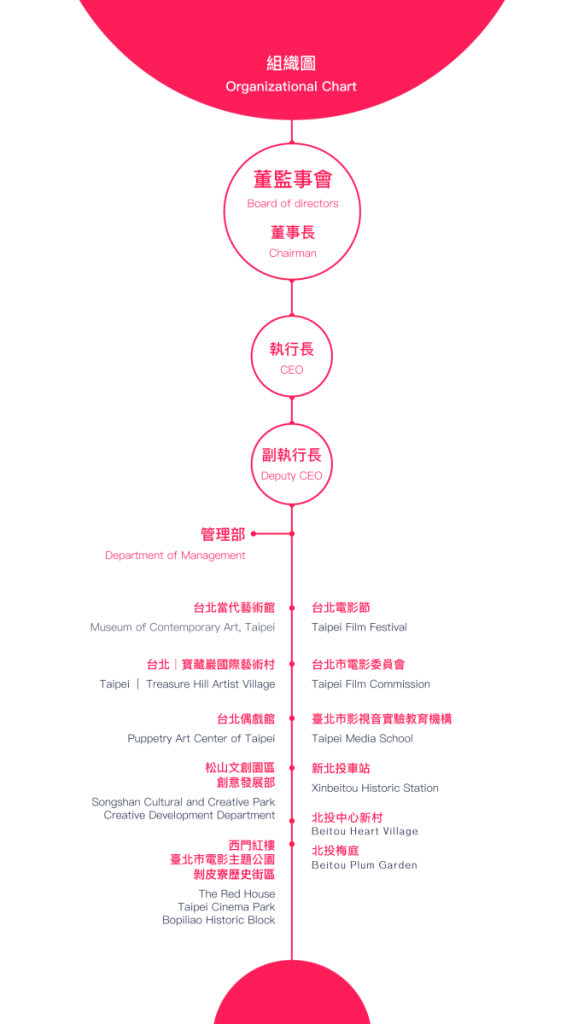
Figure 1: Organizational Chart of “Taipei Culture Foundation”
Source: Official website of “Taipei Culture Foundation”
Understanding Organizational Positioning: The Organization’s Routine Operating Framework
Artist Village Director Catherine Lee joined in 2017, overseeing work that spans from high-level space management down to detailed project execution supervision. Catherine formerly worked at Bamboo Curtain Studio, which featured a flat organizational structure with colleagues providing mutual support and sharing workloads. This experience demonstrated to her how such organizational frameworks can enhance work flexibility. Unlike the hierarchical command structure and execution model in the Artist Village organization, Catherine believes staff members must be capable of independently conceptualizing projects and need opportunities for trial and error. Managers should coach subordinates in planning techniques and allow them autonomy to implement, thereby fostering a cohesive, collaborative team.
The Artist Village Operations Department consists of three main divisions: the Residency Promotion Group, Operations Management Group, and Community Development Group. The two artist villages it oversees collaborate on a joint program called “Artist-in-Residence Taipei.” This yearly initiative recruits international artists for three-month residency terms. Selected artists can choose between the Taipei Artist Village and Treasure Hill Artist Village based on which space best suits their artistic needs. The artist village provides necessary hardware equipment for creative work, as well as support for networking, environmental familiarization, and assistance with both artistic practice and daily life integration into the local context. Given the organization’s budget constraints and staff structure, the Artist Village generally implements programs through a top-down approach, predominantly featuring policy-aligned projects, with the recent City Museum being a case in point. Bottom-up initiatives are generally venue-specific or location-based, designed to support facility operations and foster stronger regional connections, such as the Treasure Hill Light Festival at Treasure Hill Artist Village. TAV operates under the Taipei Culture Foundation. The foundation executes its activities in accordance with cultural policies established by the Taipei City Government’s Department of Cultural Affairs. Annual project proposals are submitted each August or September for budget review by the Taipei City Council, which means impromptu projects are uncommon, as the following year’s overall planning and budget allocation are determined during the previous year. Funding needed for project execution is sourced from government funding and private sector sponsorship. Externally funded projects offer more straightforward financial management. When under designated amounts, they are exempt from procurement law requirements, providing the Artist Village with flexibility afforded by the Culture Foundation. For instance, in 2020, the artist village assisted the “Taiwan Depository & Clearing Corporation” to organize the “TDCC Contemporary Art Award.” Staff recruitment offers greater flexibility than conventional public sector organizations, enabling open recruitment processes tailored to organizational needs and preferences, and allowing personnel adjustments while maintaining the existing organizational structure.
On the whole, the Culture Foundation operates with a distinctly clear vertical organizational structure characterized by top-down authority and hierarchical power distribution. After an organizational framework has been established for a while and achieved stability, the scope for making changes becomes significantly constrained. The institution maintains established systems for performance evaluation, staff recruitment, procurement, and financial processing. Newly hired staff can work according to existing protocols, with clear procedures to guide them. In other words, the more systematized an institution becomes, the more its flexibility diminishes. Facing the ongoing global pandemic, the challenge of leveraging organizational resources and limited flexibility to survive this unpredictable external environment puts managers’ strategic management competencies and adaptive decision-making capabilities to the test.
Diversifying Resource Investment
Due to the pandemic, the Taipei residency program planned for the previous year faced many uncertainties. Due to limited organizational flexibility and conservative management practices, temporary changes to plans require establishing the appropriate reporting structure based on the project’s scope, details, and financial implications. This situation makes the director’s response heavily reliant on the leader’s individual crisis management skills, leadership style, and negotiation abilities.
The 2020 Artist in Residence experienced significant challenges throughout their project implementation as a result of the pandemic’s unpredictable developments. There were instances when artists were about to depart but suddenly received cancellation orders from superiors. At this juncture, the director was required to devise emergency countermeasures and evaluate practical alternatives through internal deliberations. Organizational flexibility depends not only on institutional type and nature but also on the leader’s management approach—specifically, how they can carve out space to pursue objectives within limited parameters and progressively shift the space’s direction. When speaking about how the pandemic affected the Artist Village, Catherine used the analogy of diversified investment risk from risk management. Risk management provides a way for managers to make stable decisions amid uncertain conditions, challenging their experience and decision-making capabilities. Given the Artist Village’s operating framework, where funding originates from the previous year’s budget examination, managers must consider possible future developments and develop contingency measures as backup plans when submitting budgets. In 2021, before closing the public space at Taipei Artist Village’s Barry Room, the permanent exhibition was converted into a short-term group show featuring artists from the 2021 Cultural Diversity and Inclusivity Residency Programme. This enabled exhibitions that were typically postponed due to personnel or spatial constraints to take place, while simultaneously offering Taiwanese artists originally bound for overseas residencies the chance to organize a pre-departure group exhibition in Taiwan, providing artists with exhibition opportunities before international travel.
Moreover, “utilizing present circumstances to develop new competencies” and “empowering the team to accomplish things they had wanted to do before but couldn’t achieve” represent additional approaches to risk diversification. In other words, avoiding the allocation of all human resources solely to pre-existing project plans. Managers require the capacity for flexible resource reallocation and personnel distribution, keen observation of environmental opportunities, and judicious resource investment. “Environmental education” at Treasure Hill Artist Village, which has attracted outside attention, has consistently been a central element of TAV’s long-term project planning. Obtaining environmental education certification involves navigating several stages. Initially, related staff must acquire certification credentials, followed by securing site certification from the Environmental Protection Administration, and ultimately developing educational curricula to systematically build connections between Treasure Hill, its surrounding environment, and the natural world. Catherine leveraged the opportunity presented by pandemic-related downtime to allocate relevant personnel and initiate this project.
Beyond leveraging resources to accelerate planned projects, the Artist Village actively converts challenges into opportunities. Previously, the Taiwan Artist Village has maintained closer exchanges with Europe, America, and Asia, while Latin America and Africa have consistently represented incomplete segments that the Artist Village seeks to develop. When applying for Ministry of Culture projects this time, besides proposing online virtual residency programs, the Artist Village also attempted to create new opportunities and develop more diverse paths for the future. Organizing innovative residency formats poses significant challenges to both the creativity of artists and the planning capabilities of the Artist Village. As international travel is currently not possible, utilizing technology has become a key topic of discussion for artists and the team. During the interview, Catherine discussed creative concepts suggested by both local and international artists, including leveraging podcasts, whose listenership has grown rapidly in Taiwan in recent years, for artist dialogues, or arranging for Taiwanese artists to gather creative materials for shipment overseas, enabling foreign artists to produce works with these materials. Such novel attempts spark great curiosity about how artists from completely different cultural backgrounds will envision each other’s everyday experiences and understand each other’s cultures. This cultural clash is expected to generate captivating dynamics, and she hopes that bonds strengthened amid the pandemic will deepen, resulting in more meaningful exchanges. The Artist Village has always prioritized serving artists as its main goal. The key to this lies in how managers effectively allocate resources and implement solid risk management during regular operations. This approach maximizes the organization’s adaptability and resilience, allowing it to remain calm in the face of unexpected changes. It also empowers managers to lead their teams in directly addressing challenges during difficult times.